
An illustrative Gearology business concept
A carefully described second life for outdoor equipment
A second home for good equipment, with Gearology above the door.
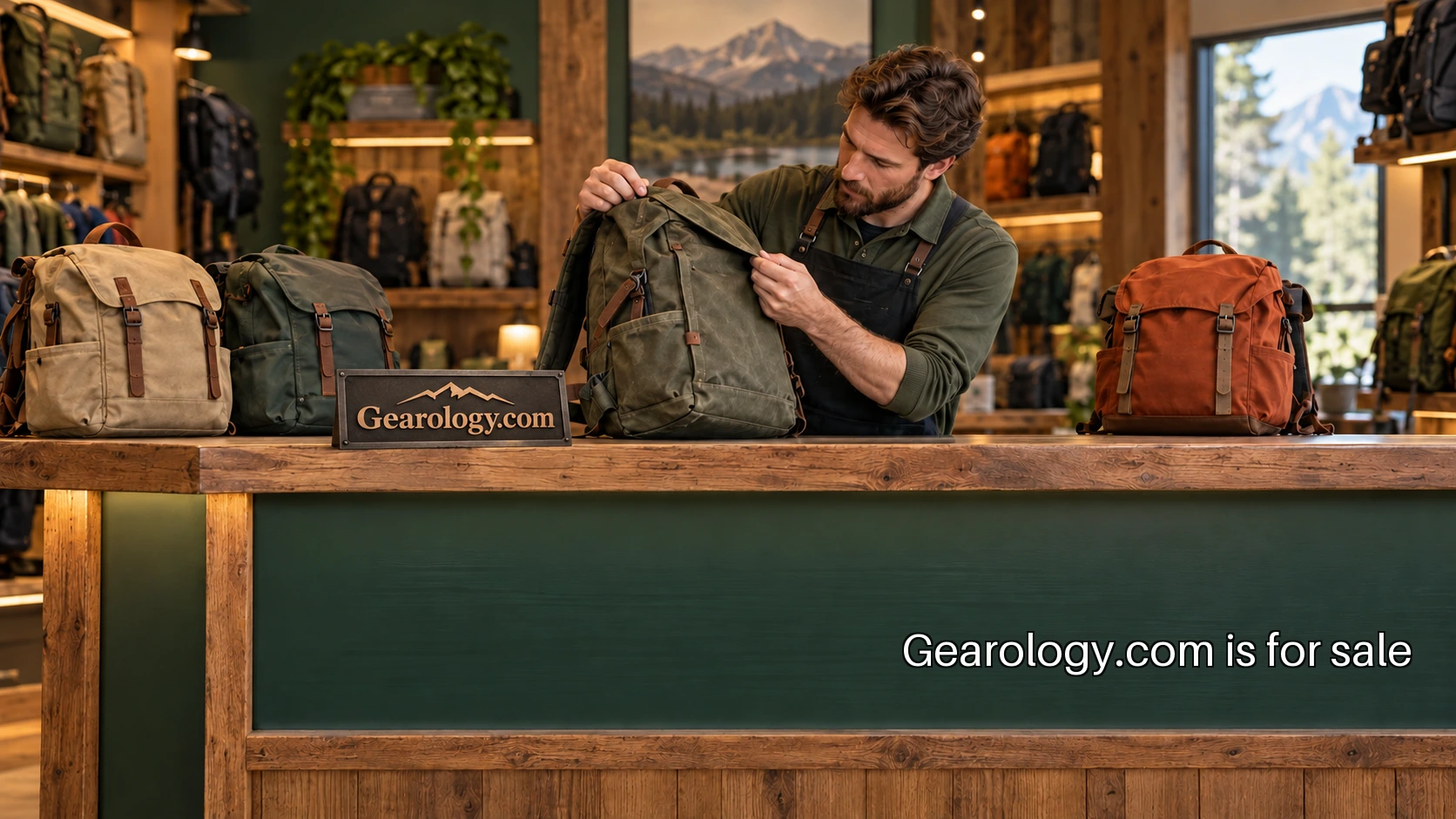
Give used goods a better product record
A Gearology resale business could begin with ordinary outdoor packs and accessories that benefit from detailed condition descriptions. The customer might be someone buying a useful bag for regular walks, or an owner clearing equipment that no longer fits their needs. The founder's task is to make the actual item easy to assess. This is an illustrative marketplace concept, rather than a currently operating resale service.
The first offer could be a small consignment catalogue in one region. Instead of accepting every kind of outdoor equipment, select categories the team can inspect, photograph, store and describe responsibly. Start with nontechnical goods and write a clear excluded-category policy. The operation should not depend on making safety judgments about climbing, rescue or other life-support equipment.
Choose who owns the transaction
A consignment shop, an owned-stock reseller and a peer-to-peer marketplace are different businesses. In consignment, the founder needs a documented intake agreement and a way to account to the owner. Buying stock outright adds purchasing and inventory decisions. A marketplace requires processes for seller verification, listing moderation and disputes between people the operator may never meet.
For an initial pilot, the simplest model may be one the founder can personally supervise with a small team. The point is not to label one model universally best. It is to make responsibility visible. Who holds the item? Who ships it? Who answers when the condition differs from the photographs? These questions belong in the operating plan before recruiting a large group of sellers.
The SBA's business-planning resources offer a structure for writing down those choices. Use the plan to identify the agreements and professional advice the chosen model needs. A generic marketplace template cannot decide the obligations of a particular business in a particular location.
Describe the individual item
Imagine the first catalogue contains twenty day packs. Each listing uses the same photo sequence: front, back, interior, base, closure and every visible area of wear. The record includes the model label, measured dimensions and what accessories are present. A stain, scuff or missing strap gets its own photograph and plain explanation. Condition labels should link to examples so the team applies them consistently.
The listing also needs a boundary between observation and inference. A photograph can show a worn base; it cannot establish everything that happened during previous ownership. Record what the team actually inspected and what remains unknown. If a material or model cannot be identified, use a precise description of the uncertainty instead of filling the gap with a guess.
Cleaning and repair need their own process. Keep manufacturer care information attached to the record where available. Do not describe an item as refurbished unless the business can say what work was performed. A replaced pull tab and a full manufacturer repair are different events. The catalogue should let the buyer understand which one happened to the item in front of them.
Make intake and fulfilment repeatable
The founder needs an intake identifier that follows the physical item through photographs, storage and dispatch. Two similar packs must not become interchangeable because their listings look alike. Store the item in a labeled location and check the identifier when packing. Keep the original listing record after sale so the support team can see what was represented.
Returns deserve a rehearsal before launch. If a buyer reports an undisclosed tear, the team needs a way to compare the listing, receive the item and record the result. The lesson may be a missed photo angle or an intake question that needs changing. The process should turn that lesson into a better checklist for the next batch.
Pricing also requires actual observations. Track acquisition or consignment costs, handling time, storage, payment fees and fulfilment work. A low purchase price does not automatically make a used item economical to process. The first pilot should reveal which categories can support the amount of attention the proposed service requires.
Find a concentrated first community
A credible distribution path is a relationship with local walking groups, outdoor clubs or repair events. Ask organizers before proposing an intake day. Explain which categories are accepted, how the model works and what participants should expect. Start with a bounded event and a fixed intake capacity so the operation can complete the work it takes in.
Useful content can support that route. Show how the catalogue photographs wear, explain the condition vocabulary and demonstrate how an item is measured. A short illustrated listing guide helps sellers prepare better information. It also gives buyers a way to ask specific questions. The Ten Essentials discussion at REI is a reminder that equipment decisions depend on the intended outing; a resale catalogue should describe products rather than prescribe a complete trip setup.
Gearology would give the founder a coherent identity across intake, product records and the catalogue. The brand could begin with a single well-run category and expand when its processes are ready. PremiumBrands.com offers Gearology.com as a domain acquisition. Ask about pricing with the resale model you have in mind, or describe another equipment business that could make good use of the name.
A name to put above the work.
Tell PremiumBrands about the equipment business you have in mind.
Ask About Pricing